

War is one of the most devastating forces that humanity has ever faced. It tears apart families, destroys communities, and leaves behind wounds that last for generations. The sound of gunfire replaces the laughter of children, and cities that were once full of life become fields of silence and sorrow. Yet, even in the deepest darkness of conflict, the human spirit refuses to give up hope. Across history, faith, and lived experience, one truth has remained constant: where war ends, the blessing of peace begins.
Peace is far more than the absence of war. It is the presence of healing, the return of hope, and the rebuilding of broken lives. It is the moment a displaced mother finally holds her child safely again. It is the slow, sacred process of reconciliation — of communities learning to see each other not as enemies, but as brothers and sisters sharing the same earth. This article explores 101 blessings that rise from the darkness of war and bring with them the light of lasting peace.
The Pain of War and the Promise of Peace
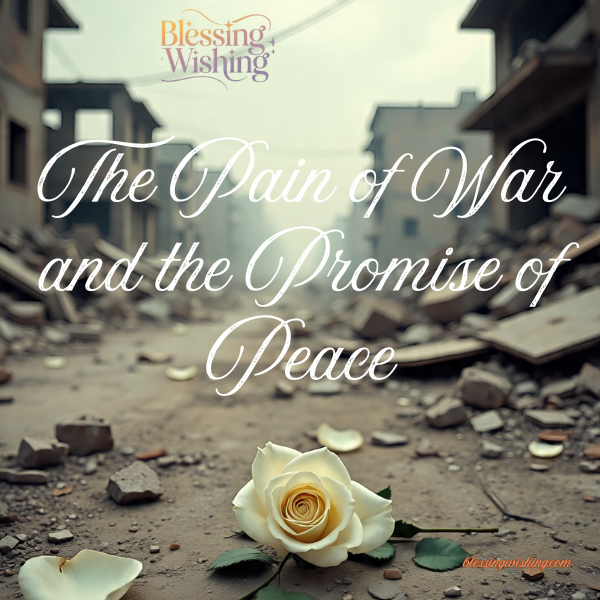
War causes suffering that words can barely describe. Families are separated. Homes are reduced to rubble. Innocent people — children, elders, civilians — bear the greatest cost of conflicts they did not choose. According to peacebuilding research, post-conflict societies carry deep psychological, social, and physical scars that can last for decades if left unaddressed.
Yet alongside every story of destruction, there is also a story of survival. War reveals the darkest parts of human nature, but it also uncovers extraordinary courage, compassion, and resilience. Communities that have suffered the most often become the most committed to building a better future. The pain of war plants the seeds of a promise — the promise that one day, peace will come.
What War Takes Away
- Safety, security, and stability
- Family bonds and community connections
- Access to education, healthcare, and basic needs
- Mental and emotional wellbeing
- The simple joy of daily life
What Peace Restores
- The freedom to live without fear
- Reunion of separated families
- Rebuilding of schools, hospitals, and homes
- Emotional healing and psychological recovery
- A future filled with possibility
How War Teaches the True Value of Peace
Those who have lived through war understand the value of peace in a way that words alone cannot teach. A soldier who returns home, a refugee who finally reaches safety, a child who can sleep without the sound of bombs — these people carry inside them a deep, unshakeable gratitude for peace.
War strips life down to its most essential truth: that human connection, safety, and love matter more than anything else. It teaches nations that no political goal is worth the price of innocent lives. It reminds leaders that dialogue, however difficult, is always better than destruction.
As research into post-conflict reconciliation shows, nations that genuinely pursue peace — not just a ceasefire, but full social and political healing — are far less likely to return to conflict. The lesson of war, when truly learned, becomes the foundation of a lasting peace.
Blessings That Rise From the Ruins of War
History has shown time and again that blessings can rise even from the most broken places. Germany and Japan, devastated after World War II, were rebuilt into thriving, peaceful nations. Rwanda, torn apart by genocide, has become one of Africa’s most stable and forward-looking countries. Vietnam, once defined by decades of brutal conflict, now enjoys normalized international relations and growing prosperity.
These are not accidents. They are the results of intentional acts of peacebuilding — of communities choosing forgiveness over revenge, reconciliation over retaliation, and hope over despair.
Here are some of the most powerful blessings that emerge from war’s aftermath:
- Renewed appreciation for human life
- Stronger community bonds forged through shared suffering
- New generations committed to preventing future conflict
- International cooperation and humanitarian partnerships
- Greater empathy across cultural and national boundaries
- Stronger institutions designed to protect human rights
- A deeper, more genuine love of peace
The Healing Power of Peace After Years of War
When war ends, healing does not happen overnight. It is a long, complex, and deeply personal journey — for individuals, families, and entire nations. Post-conflict reconstruction involves rebuilding not just physical infrastructure like roads, schools, and hospitals, but also the emotional and social fabric of communities that have been torn apart.
Research on post-conflict societies highlights that true healing requires both restorative justice (helping victims heal and move forward) and retributive justice (holding those responsible accountable). When both are practiced together, societies are far more likely to achieve lasting peace and avoid returning to conflict.
The Stages of Healing After War
- Ceasefire and immediate humanitarian relief
- Physical reconstruction — homes, schools, hospitals
- Truth and reconciliation processes
- Psychological support for survivors and veterans
- Rebuilding of trust between communities
- Long-term economic development and stability
Peace is not the end of the journey. It is the beginning of an even greater one — the journey of becoming whole again.
Faith and Hope: Finding God’s Blessings in Times of War
Across every faith tradition, war is met with prayer. When violence spreads and fear takes hold, people of faith turn to God — not because they have all the answers, but because they trust in a power greater than human conflict. The Bible reminds believers that peacemakers are blessed, calling them children of God (Matthew 5:9). The Islamic greeting As-Salamu Alaykum — “Peace be upon you” — is itself a daily blessing, a reminder that peace is sacred.
During times of war, prayer becomes one of the most powerful forms of resistance against despair. It lifts the hearts of the suffering, strengthens the resolve of the peacemaker, and keeps alive the flame of hope when everything else seems dark.
Blessings offered during and after war carry a special weight. They are not passive wishes — they are declarations of faith that peace will come, that healing is possible, and that God’s grace is greater than any human conflict.
Powerful Blessings for a World at War
- May God protect the innocent and comfort the grieving.
- May peace replace fear in every heart touched by war.
- Blessed are those who suffer — may they find strength and restoration.
- May the darkness of war give way to the light of God’s peace.
- May every prayer for peace rise like incense before the throne of God.
How Nations Rebuild With the Blessing of Peace
The process of rebuilding a nation after war is one of the most complex challenges that governments and communities face. It requires simultaneous progress across military, political, economic, and social dimensions. According to the United Nations Peacebuilding Commission, established in 2005, effective post-conflict reconstruction must address all of these areas together — no single approach is enough on its own.
History offers powerful examples of successful rebuilding. The Marshall Plan helped restore Western Europe after World War II. International organizations have supported post-conflict recovery in Mozambique, El Salvador, Namibia, and East Timor. Each of these cases demonstrates that when the international community comes together in genuine solidarity, nations can rise from the ashes of war and build something better.
Key pillars of national rebuilding include:
- Security and law enforcement — restoring safety and order
- Political governance — building inclusive, accountable institutions
- Economic recovery — creating jobs, restoring infrastructure, reducing poverty
- Social reconciliation — healing divisions and rebuilding trust
- Human rights protections — ensuring dignity and justice for all citizens
The Role of Prayer and Blessings During War
Throughout human history, prayer has been a source of strength during the darkest moments of war. Soldiers have prayed for protection. Families have prayed for reunion. Nations have prayed for an end to suffering. These prayers are not empty words — they are acts of profound faith and love.
Blessings offered to those affected by war carry deep meaning. A blessing for a soldier reminds them that they are not forgotten. A blessing for a refugee family reminds them that they are still human, still loved, still worthy of dignity. A blessing for a war-torn nation declares that even in ruin, hope is not lost.
Community prayer and blessings also play a practical role in peacebuilding. Religious leaders who call for dialogue and reconciliation can shift the mood of entire communities. Women’s prayer groups, interfaith gatherings, and community blessings have all contributed to peace processes in countries ranging from Sierra Leone to Côte d’Ivoire.
Children of War Who Became Messengers of Peace
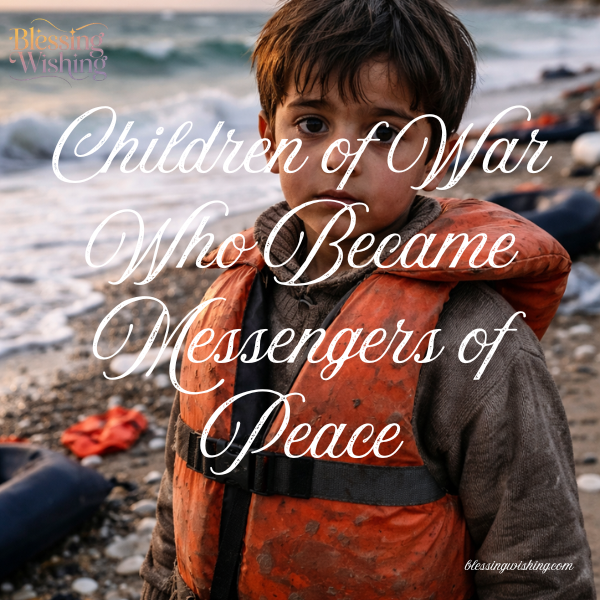
Some of the world’s most powerful advocates for peace are those who experienced war as children. Their stories remind the world that even the most painful beginnings can lead to a life of extraordinary purpose.
- Malala Yousafzai — shot by the Taliban for attending school, she became a global voice for education and peace.
- Elie Wiesel — a Holocaust survivor who dedicated his life to ensuring the world never forgot, and never repeated, the horrors of genocide.
- Immaculee Ilibagiza — a survivor of the Rwandan genocide who went on to write and speak about forgiveness and healing.
These individuals did not let war define them. They let it refine them — turning their pain into purpose and their suffering into a sacred mission for peace. Their lives are themselves a blessing, proof that even the darkest war cannot extinguish the light of the human spirit.
Many Ways Peace Blesses a World Broken by War
Peace is not one blessing — it is hundreds of blessings, flowing into every corner of a war-torn world. Here is a selection from the 101 blessings that come when peace finally arrives:
- Children sleep safely through the night
- Families separated by conflict are reunited
- Refugees return to their homeland
- Schools reopen their doors
- Hospitals are rebuilt and restaffed
- Fields are planted and harvests are shared
- Streets are filled with the sound of life again
- Veterans begin the journey of healing
- Mothers stop weeping for lost children
- Communities begin to rebuild trust with one another
- Former enemies sit at the same table
- Prisoners of war return home to their families
- Displaced persons find permanent shelter
- Clean water flows to communities that were denied it
- Religious leaders unite in blessing and prayer
- Children draw pictures of homes instead of bombs
- Poets write of hope instead of grief
- Markets reopen and economies begin to breathe
- Borders become pathways instead of battlegrounds
- The world learns, once again, that peace is possible
From Darkness to Light: The Final Blessing of Peace
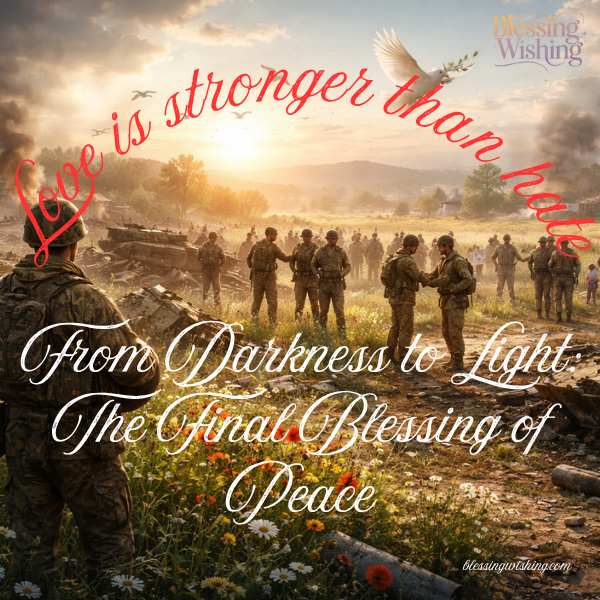
The deepest blessing of peace is not simply that war has stopped. It is that something new has begun. Where there was hatred, there is the possibility of understanding. Where there was destruction, there is the possibility of creation. Where there was despair, there is the possibility of hope.
Every nation that has walked through war and emerged into peace carries a testimony: that darkness is never the final word. That even after the worst that human beings can do to one another, healing is possible. Reconciliation is possible. A future built on justice, dignity, and love is possible.
As the saying goes: if there is to be peace in the world, there must be peace in the nations — and if there is to be peace in the nations, it must begin in the hearts of individual men and women. The final blessing of peace is this: it begins with us.
Conclusion
War leaves behind wounds that can last for generations. But peace — true, lasting, deeply rooted peace — carries with it 101 blessings that touch every part of human life. It heals the body, restores the spirit, rebuilds communities, and opens the door to a future that war tried to close forever.
From the darkness of war comes the blessing of peace — not automatically, not easily, but through faith, prayer, courage, reconciliation, and the unbreakable human will to survive and to hope. May evey nation torn by conflict find its way to this blessing. And may every soul scarred by war receive the healing it deserves.
Peace is not just the absence of war. It is the presence of every blessing that makes life worth living.
Frequently Asked Questions
Q: What is the main blessing that comes from war?
The deepest blessing that emerges from war is a renewed and profound appreciation for peace, human life, and the importance of reconciliation among all people.
Q: How does faith help people survive war?
Faith provides hope, strength, and a sense of divine protection during conflict, helping individuals and communities endure suffering and believe in the possibility of healing.
Q: Can nations truly heal after years of war?
Yes — history shows that nations like Germany, Japan, Rwanda, and Vietnam have successfully rebuilt after devastating wars through reconciliation, international support, and strong peacebuilding efforts.
Q: What role do prayers and blessings play during wartime?
Prayers and blessings comfort the suffering, strengthen peacemakers, and keep the flame of hope alive when fear and despair threaten to overwhelm communities.
Q: Who are some famous messengers of peace who survived war?
Malala Yousafzai, Elie Wiesel, and Immaculée Ilibagiza are among the most well-known survivors of war and violence who became powerful voices for peace and human dignity.
Q: How long does it take for a nation to recover from war?
Recovery timelines vary greatly, but comprehensive peace — covering security, governance, economic rebuilding, and social reconciliation — typically takes decades of sustained effort and commitment.
Q: What is the difference between a ceasefire and true peace?
A ceasefire stops the fighting; true peace involves full social, political, and economic healing, as well as genuine reconciliation between former enemies.
Q: How can ordinary people contribute to peace after war?
Through acts of compassion, community service, interfaith dialogue, supporting humanitarian organizations, and choosing forgiveness over hatred in their daily lives.

I am a passionate writer with over five years of experience specializing in heartfelt blessings, wishes, and inspirational messages. My goal is to help people express love, gratitude, and positivity through meaningful words for every special occasion.